III Jornada de Hidrología

Context
From January 21 to 23, 2026, the Pucón Campus of the Universidad de La Frontera (UFRO) hosted the III Hydrology Conference, bringing together members of the national hydrology community and reaffirming the event’s role as a key platform for collaboration among scientific research, professional practice, and public water management in Chile.
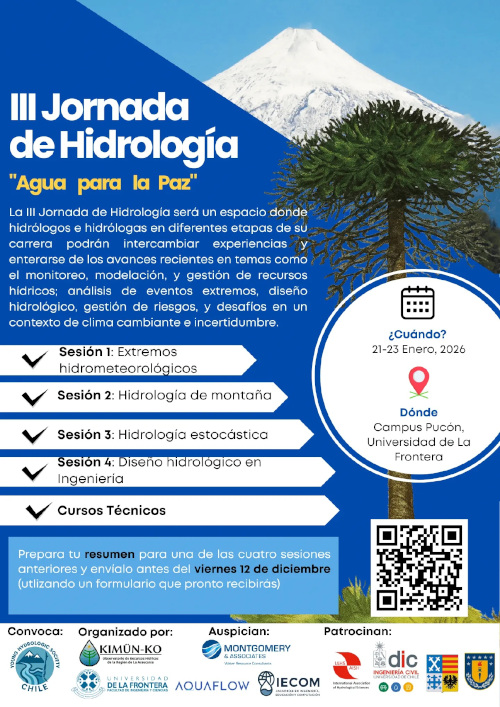
Promotional flyer for the III Hydrology Conference.
This activity was organized by the Kimün-Ko Water Resources Observatory, the Faculty of Engineering and Sciences and the Doctoral Program in Natural Resource Sciences of the University of La Frontera, convened by the Association of Young Hydrologists, and sponsored by the International Association of Hydrological Sciences, the Department of Civil Engineering of the University of Chile, the Department of Water Resources of the University of Concepción, and the School of Civil Engineering of the Universidaad Diego Portales.
The event was led by Dr. Mauricio Zambrano-Bigiarini, with the organizing committee also including Dr. Alonso Pizarro (Universidad Diego Portales), Dr. Sebastián Krogh (Universidad de Concepción), and Dr.(c) Eduardo Muñoz-Castro (SLF-ETH).
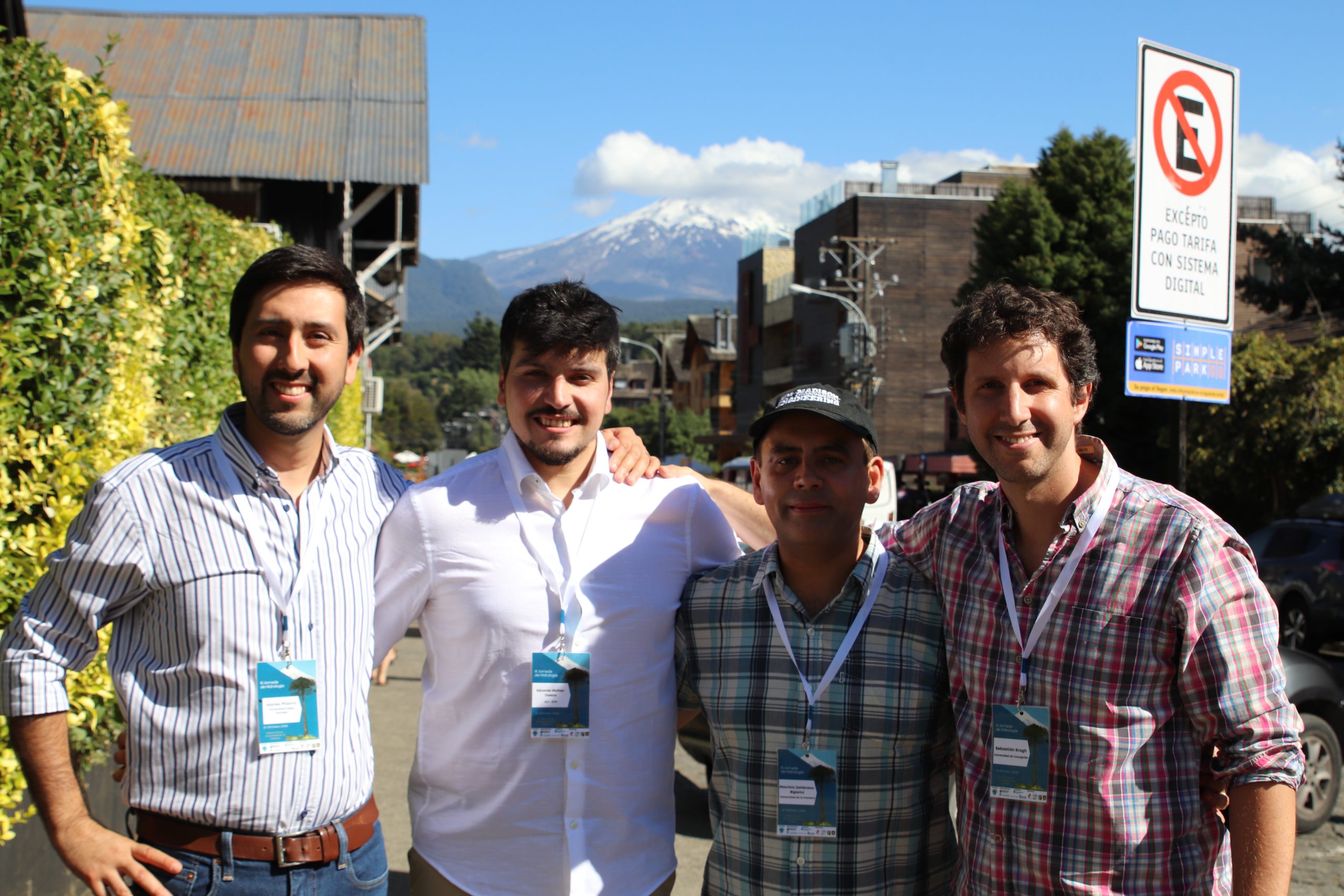
Organizing Committee of the III Hydrology Conference. From left to right: Dr. Alonso Pizarro (UDP), Dr(c) Eduardo Muñoz (SLF-ETH), Dr. Mauricio Zambrano-Bigiarini (UFRO), and Dr. Sebastián Krogh (UdeC)
In a context characterised by high climate variability, persistent drought conditions, and an increasing frequency of extreme hydrometeorological events, Hydrology has become a strategic discipline for evidence-based decision-making. Within this framework, the III Hydrology Conference convened researchers, professionals from the public and private sectors, and undergraduate and graduate students from across the country, fostering interdisciplinary dialogue and strengthening professional networks.
Keynote lectures
The scientific program featured two keynote lectures:
- IWRM, Resilience and Water Security: How to Reconcile Concepts in the Real Management of Basins, delivered by Dra. Pilar Barría (U. de Chile). The lecture reviewed the current regulatory framework and its implications for emerging water institutions, examined proposed policy changes, and discussed pathways to reconcile the concepts of integrated water resources management (IWRM), resilience, and water security in operational watershed management.

Figure 1. Dra. Pilar Barría.
- Water Security in Chile: Characterisation and Future Perspectives, delivered by Dr. Camila Álvarez Garretón, researcher at the Center for Climate Science and Resilience (CR2). Her presentation addressed current challenges and future scenarios related to water availability and water use in Chile, emphasizing the need for integrated planning under changing climatic conditions.
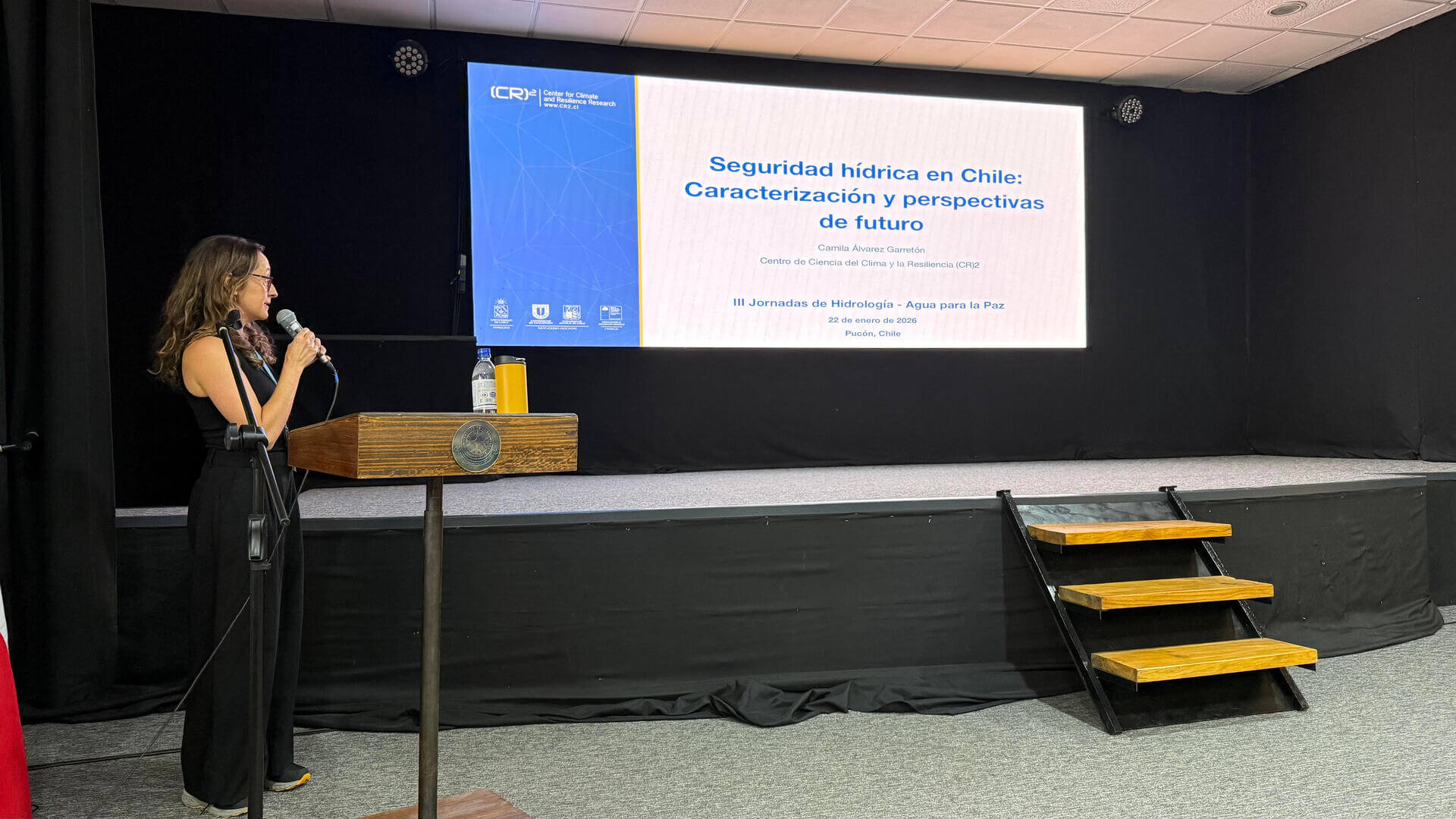
Figure 1. Dra. Camila Álvarez-Garretón during her keynote lecture.
Thematic sessions
The scientific program also included four thematic sessions, each featuring oral presentations and poster sessions that highlighted recent advances in research and professional practice:
-
Session 1 - Hydrometeorological extremes: characterisation, modelling and forecasting
-
Session 2 - Mountain Hydrology: monitoring, modeling and interaction of processes
-
Session 3 - Hydroinformatics: data analysis, forecasting, and machine learning
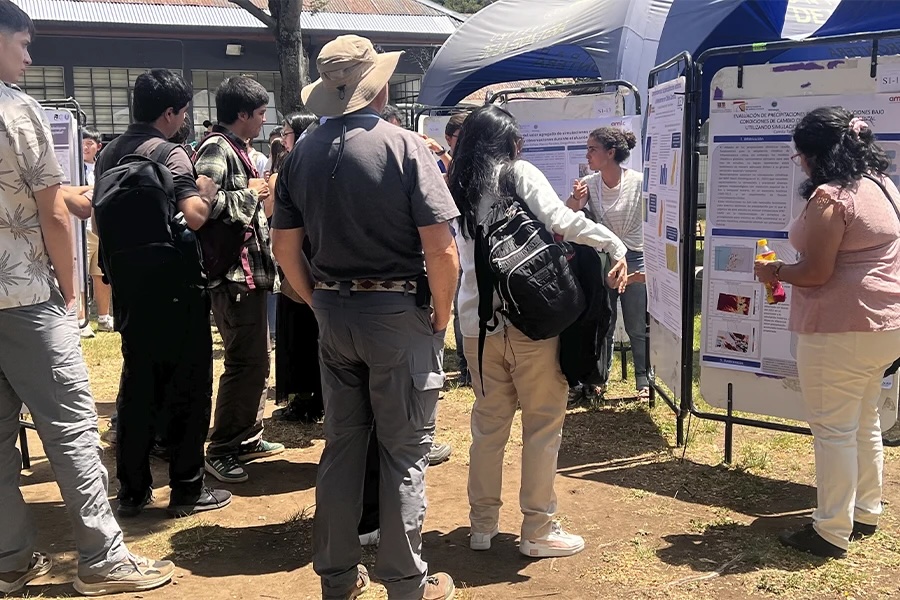
Poster session.
Specialized courses
As an integral component of the Conference, two specialised courses were offered to strengthen technical and professional competencies in key areas of water management.
- Course 2a: Excellence in Hydrometric Measurement: From Theory to Practice with Low Uncertainty, led by Jorge Labra, representative of AQUAFLOW.
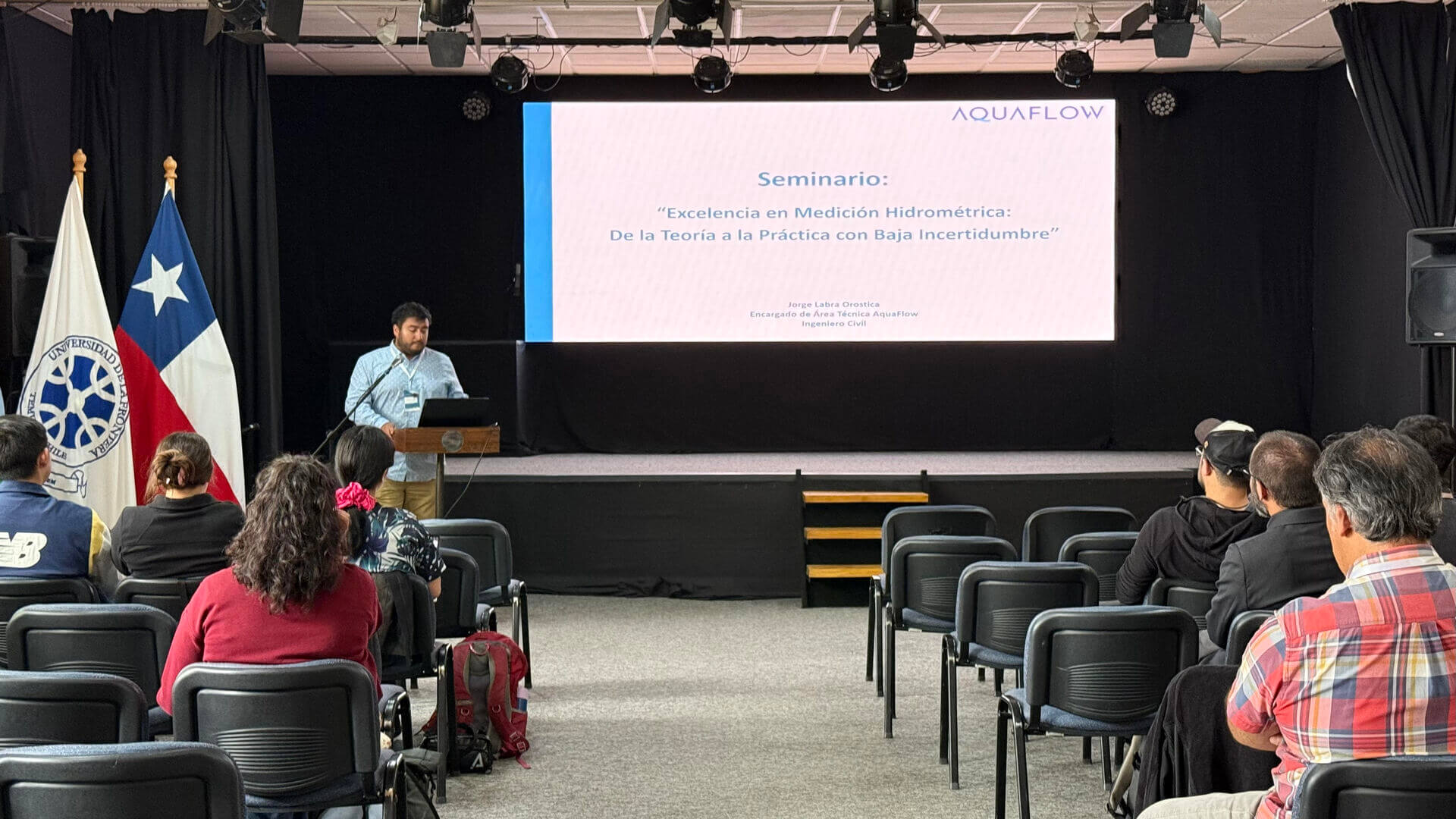
Figure 2a. Engineer Jorge Labra (AQUAFLOW)
- Course 2b: Water resource estimation in lithium projects, delivered by Diego Ojeda of Montgomery & Associates Chile.
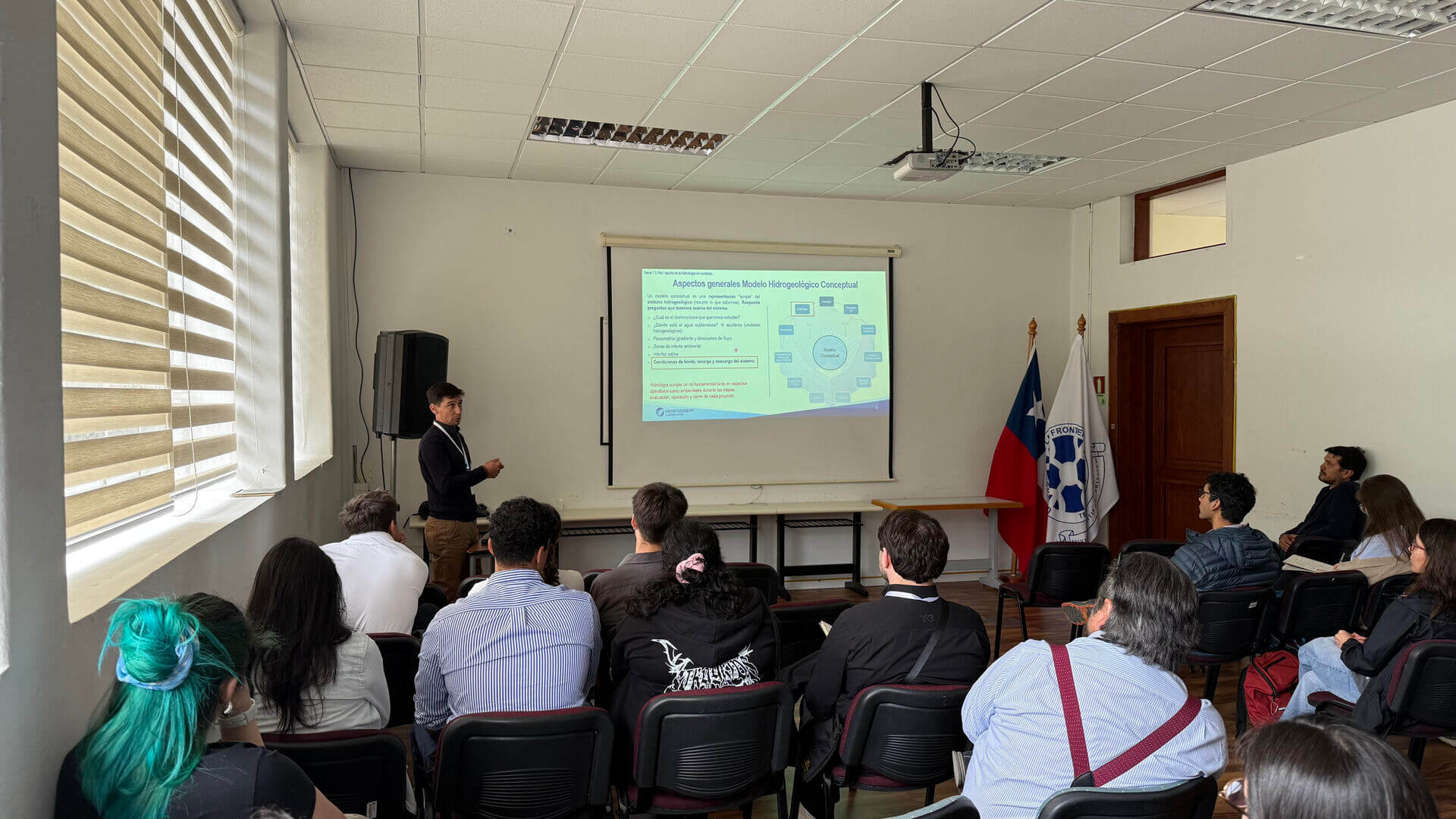
Figure 2b. Engineer Diego Ojeda (Montgomery & Associates Chile)
These training activities were well attended and distinguished by their applied orientation and direct relevance to current operational challenges in the water sector.
Field trip
One of the most highly valued activities among participants was the field trip, designed to provide direct exposure to the natural environment and monitoring infrastructure supporting hydrological research in the upper Trancura River Basin near Llafenco. The activity began at the UFRO Pucón Campus and continued to PuAm Ecolodge, where participants visited both a meteorological station and a soil moisture monitoring site.
The excursion included a guided trek through native vegetation, allowing participants to observe local conditions influencing hydrological processes. Simple field measurements, including infiltration tests, were conducted to illustrate water movement at the local scale and its connection to hydrological modeling and watershed analysis.
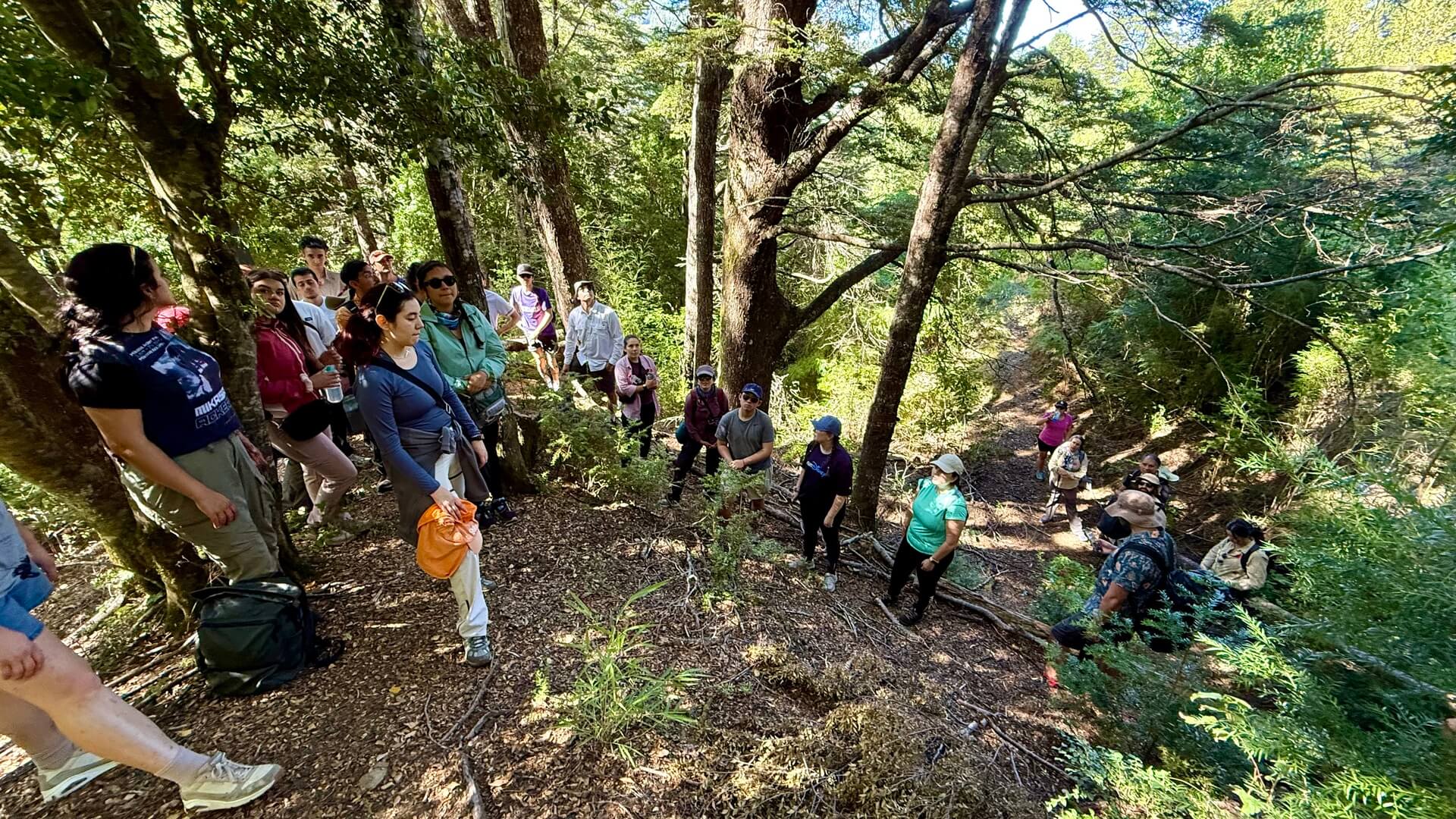
Participants in the field trip to PuAm Ecolodge.
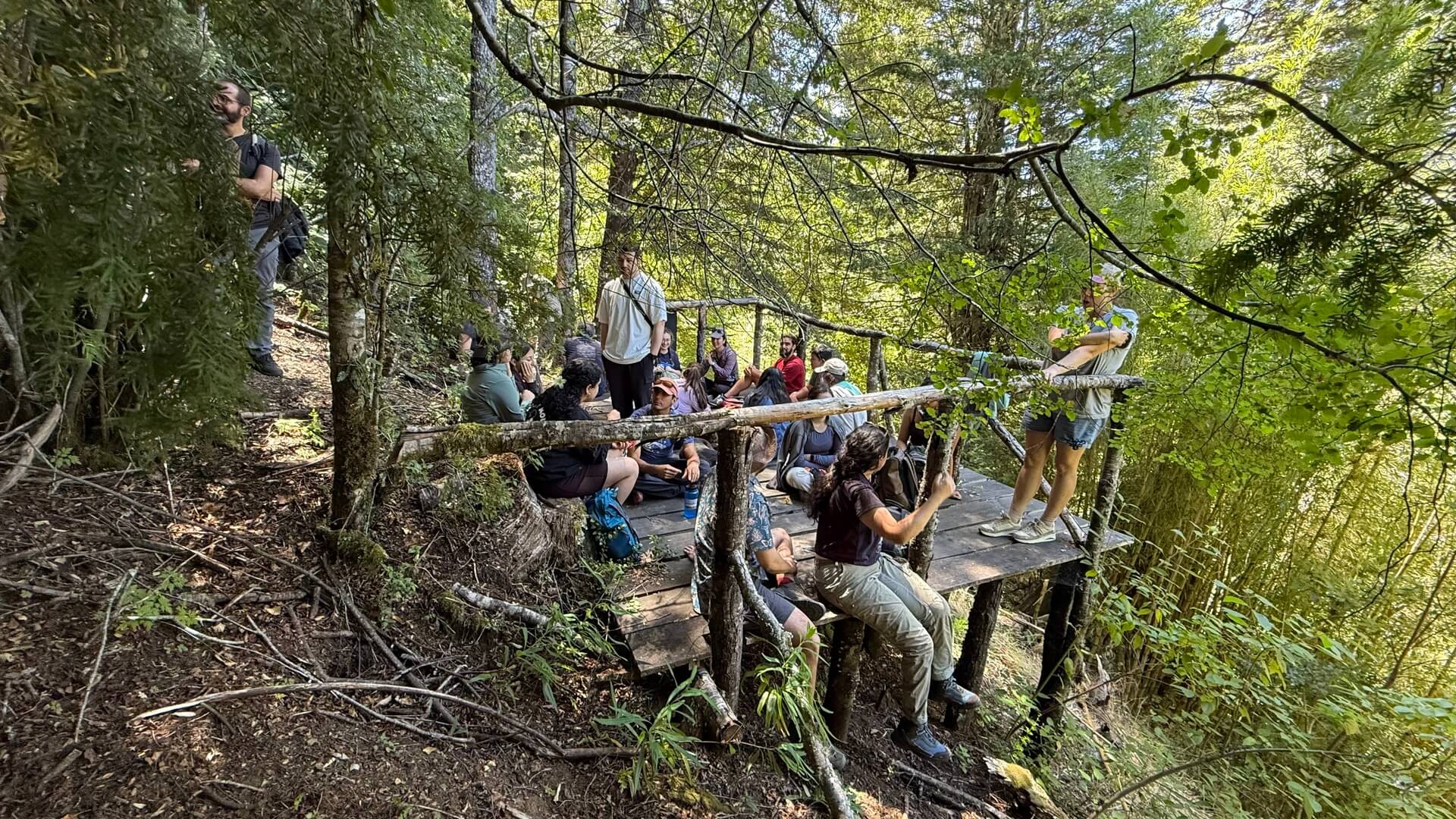
Participants in the field trip to PuAm Ecolodge.
Chilean Hydrology Prize
One of the most significant milestones of the meeting was the inauguration of the “Chilean Hydrology Prize”, an award established to recognize individuals whose careers have made substantial contributions to the advancement of hydrology in Chile.
In its first edition, the prize was awarded to Professor Ximena Vargas Mesa, in recognition of her enduring legacy in Chilean hydrology, her outstanding academic achievements, and her influential role in advancing engineering and applied hydrology, as well as in training generations of hydrologists over more than four decades.
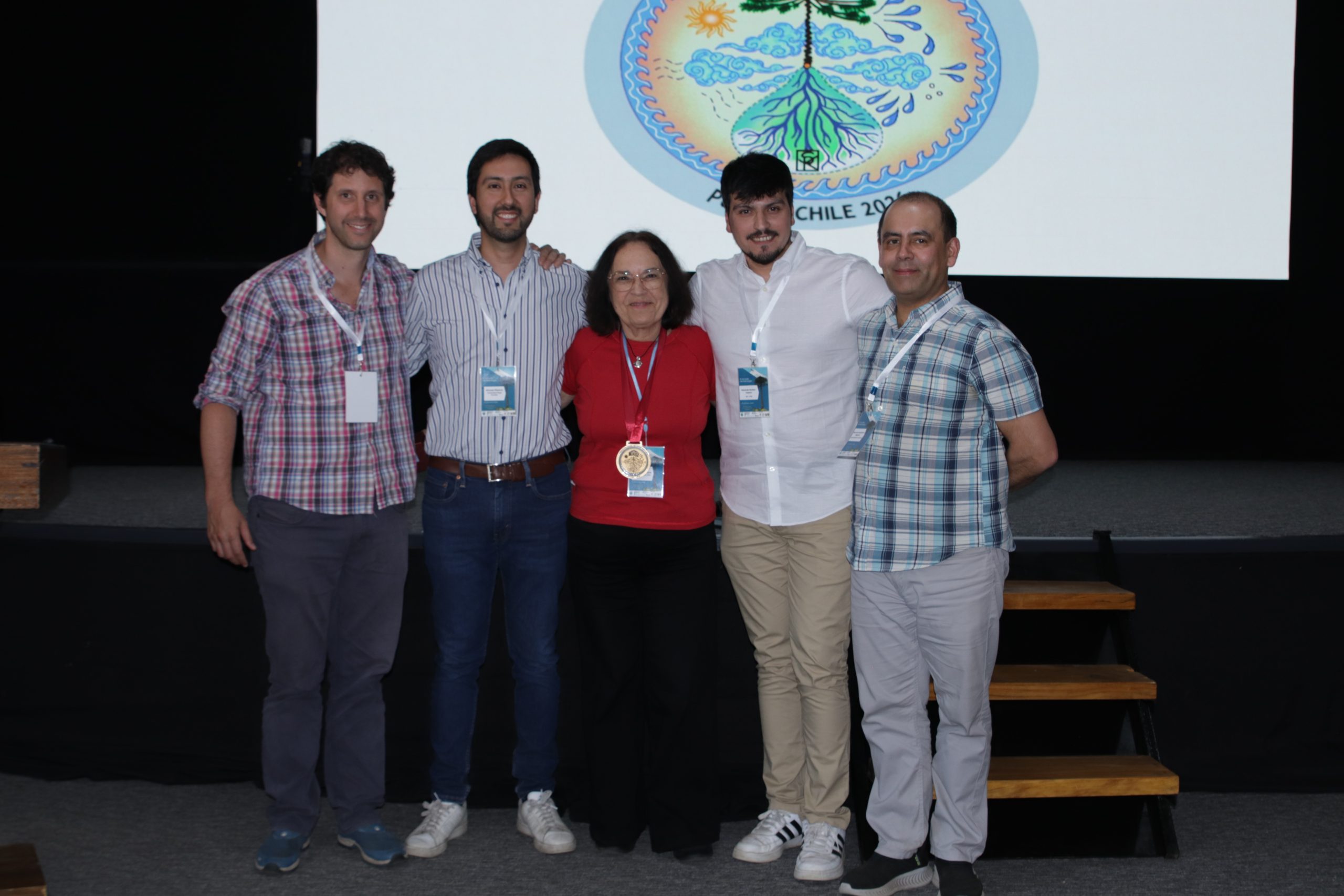
Organizing Committee of the III Hydrology Conference together with Professor Ximena Vargas, recipient of the first Chilean Hydrology Prize.
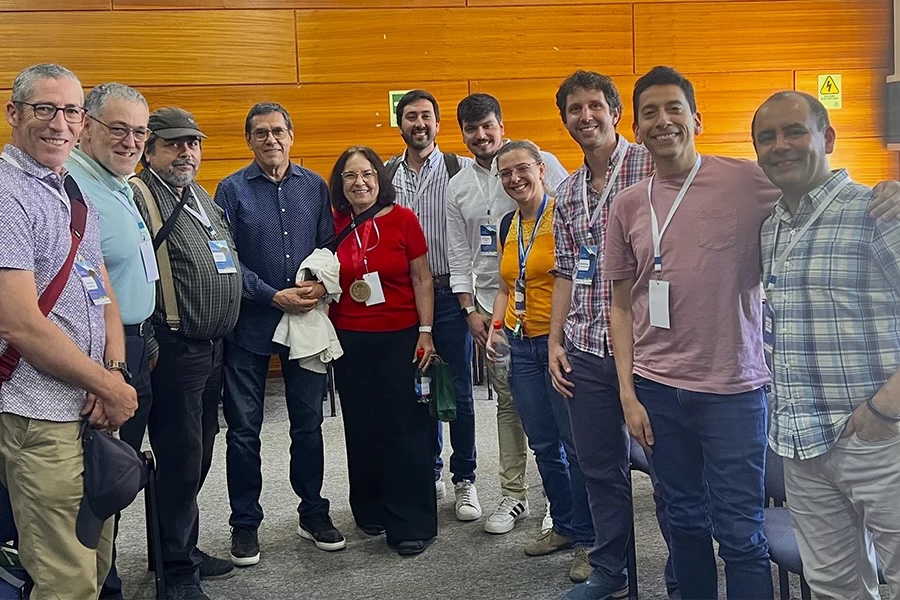
Faculty members attending the III Hydrology Conference together with Professor Ximena Vargas, recipient of the first Chilean Hydrology Prize.
Acknowledgments
The Organizing Committee of the III Hydrology Conference expressed its sincere gratitude for the financial and institutional support provided by AQUAFLOW, Montgomery & Associates Chile, Vertientes, and IECOM, whose contributions were essential to the successful implementation of the event.
With strong participation and a broad range of disciplinary perspectives, the III Hydrology Conference concluded by reinforcing the importance of strengthening professional networks, promoting knowledge exchange, and advancing water management grounded in scientific evidence, inter-institutional collaboration, and territorial relevance. The event thereby consolidates its position as a leading national forum for hydrology in Chile.
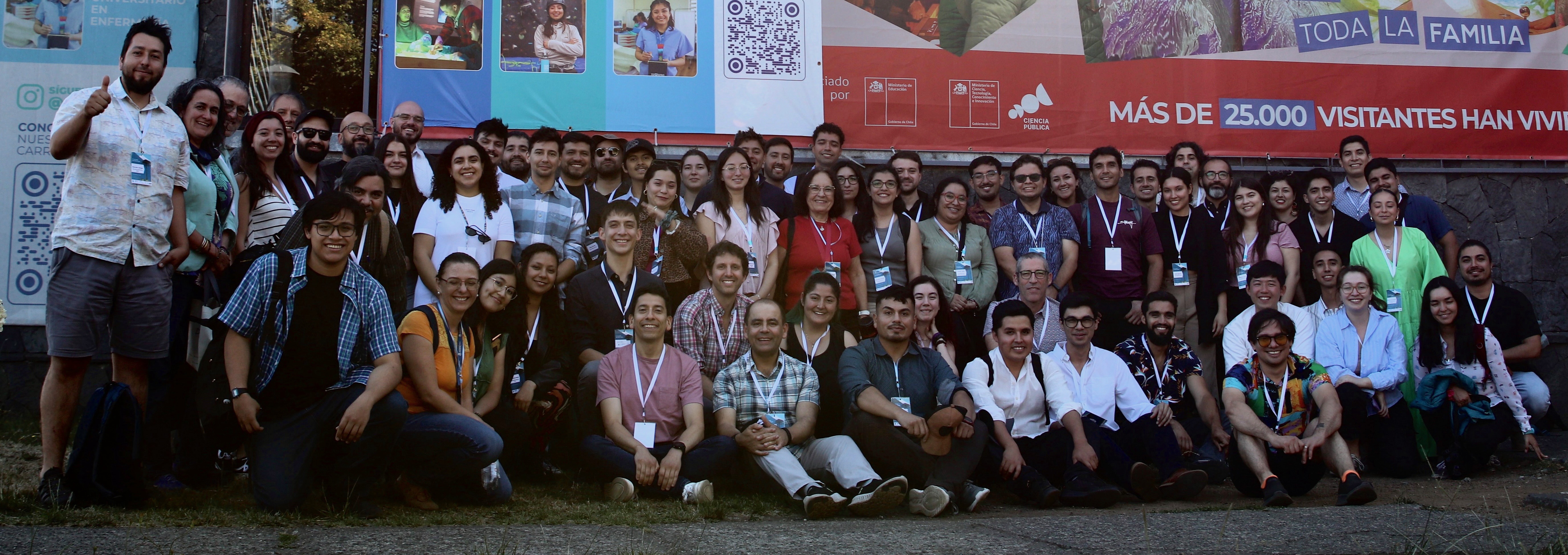
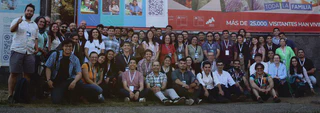
Official photo of the III Hydrology Conference (some attendees are missing).

I am an Associate Professor in the Department of Civil Engineering at the University of La Frontera. I hold a PhD in Environmental Engineering from the University of Trento (Italy) and completed postdoctoral training at the European Commission’s Joint Research Centre. I have more than 20 years of experience in water resources research and have previously served as an Associate Researcher at the Center for Climate and Resilience Research (CR)2 and as a member of the Earth Sciences Assessment Group of the Chilean National Research and Development Agency (ANID).
My research lies at the interface of hydrology, data science, and environmental sciences, with a particular focus on the use of gridded datasets and open-source tools to investigate droughts, extreme events, and water-related impacts of global change.
I work across spatial and temporal scales to improve the understanding of catchment-scale hydrological processes and to translate this knowledge into operational modelling, forecasting, and early-warning systems that support robust environmental decision-making.
Please reach out to collaborate 😃