III Regional Climate Change Seminar

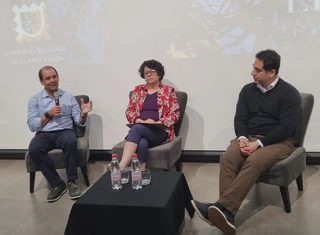 Image credit: MMA Araucanía
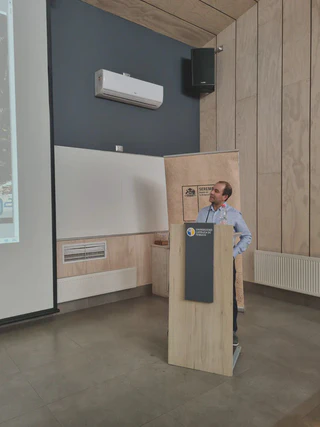
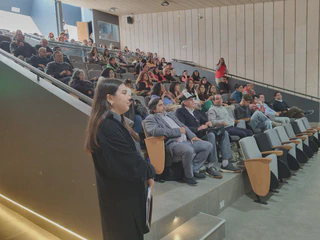
On Friday, November 21 2025, I participated as a speaker at the III Regional Climate Change Seminar, organized by the Regional Environmental Secretariat (SEREMI) of the Araucanía Region, the Regional Government of the Araucanía Region, the Catholic University of Temuco, and EBP.
The seminar aimed to share the contents of the Araucanía Region’s Regional Climate Change Action Plan with key stakeholders in the region, strengthening regional understanding, ownership, and commitment to addressing the challenges of climate change.
Through a participatory, informative, and cultural forum, the seminar sought to highlight the actions being implemented in the region, promote the exchange of experiences, and raise awareness about the importance of local climate action to move towards a more resilient and sustainable region. The event included the participation of regional experts and professionals from public institutions who presented studies, projects, and public policy developments with an applied focus on case studies.
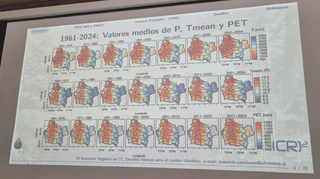
Dr. Zambrano-Bigiarini’s presentation, titled Towards a Resilient Araucanía: Water Challenges in the Face of Climate Change showcased the progress of the Water Resources Observatory (Kimün-Ko) on three key issues related to water resources in the Araucanía Region:
-
Changes in the hydrological regime of mountain basins and their impact on projected spring and summer flows,
-
Trends towards increased droughts and water scarcity,
-
increased risk of floods and mudslides, with damage to communities and infrastructure.
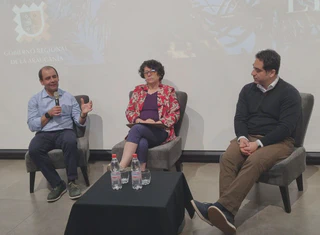
A panel discussion followed.

I am an Associate Professor in the Department of Civil Engineering at the University of La Frontera. I hold a PhD in Environmental Engineering from the University of Trento (Italy) and completed postdoctoral training at the European Commission’s Joint Research Centre. I have more than 20 years of experience in water resources research and have previously served as an Associate Researcher at the Center for Climate and Resilience Research (CR)2 and as a member of the Earth Sciences Assessment Group of the Chilean National Research and Development Agency (ANID).
My research lies at the interface of hydrology, data science, and environmental sciences, with a particular focus on the use of gridded datasets and open-source tools to investigate droughts, extreme events, and water-related impacts of global change.
I work across spatial and temporal scales to improve the understanding of catchment-scale hydrological processes and to translate this knowledge into operational modelling, forecasting, and early-warning systems that support robust environmental decision-making.
Please reach out to collaborate 😃